

Nubia Z80 Ultra: In the ever-evolving world of 2025 flagships, where Snapdragon 8 Elite chips are the norm and AI cameras promise the moon, the Nubia Z80 Ultra arrives as a bold outlier. Launched in late October 2025 by ZTE’s gaming-centric sub-brand, it starts at $729 for the 12GB/256GB model, undercutting rivals like the Samsung Galaxy S25 Ultra ($1,299) while packing a 7,200mAh battery, a unique 35mm main camera, and the latest Qualcomm silicon.
Drawing from hands-on tests by GSMArena and Multicore, plus early user buzz on X, this review dissects whether Nubia’s “humanistic imaging” ethos delivers a compelling daily driver or remains a niche gaming snapper. Spoiler: It’s a spec monster with artistic ambitions, but software stumbles hold it back from perfection.
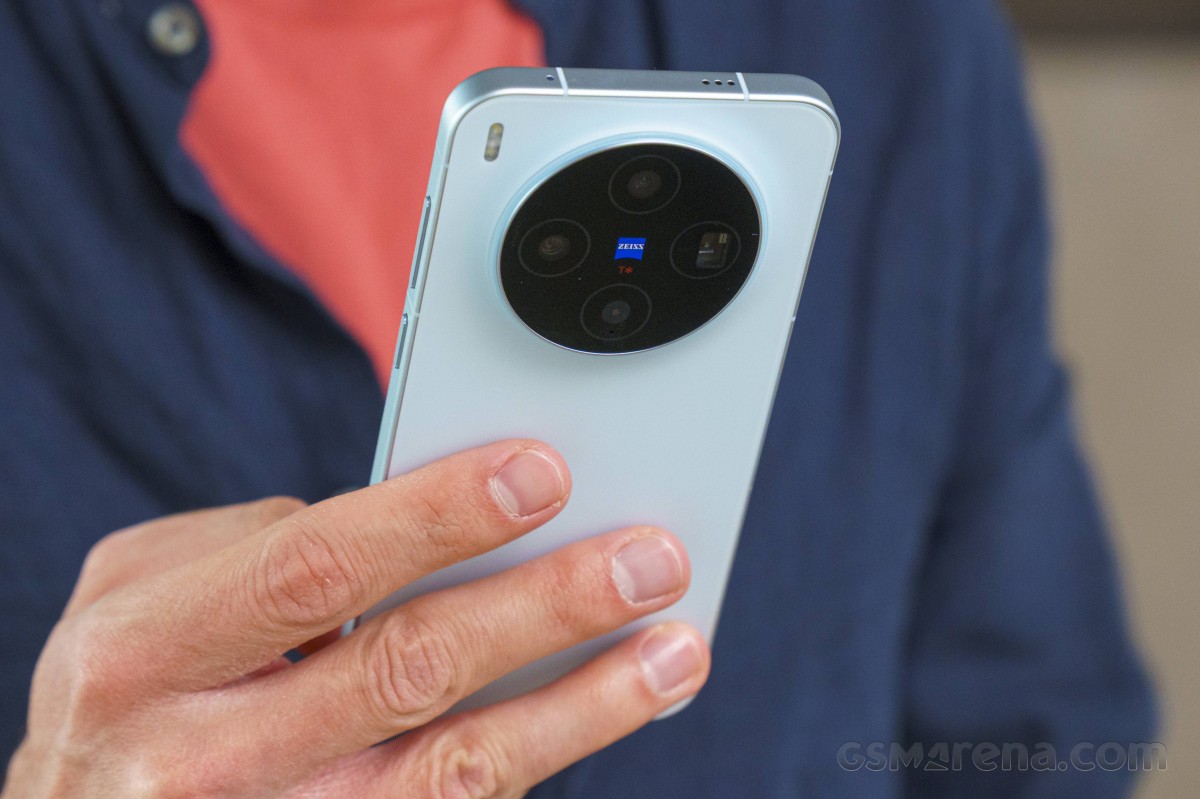
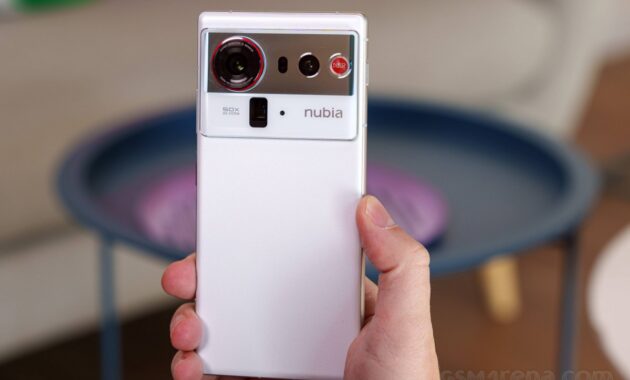
At 164.5 x 77.2 x 8.6mm and 227g, the Z80 Ultra feels substantial yet balanced, like a compact camera masquerading as a phone. Its aluminum frame and Gorilla Glass Victus 2 back come in Starry Night (a shimmering silver-white with holographic flecks) or classic black, accented by a massive rectangular camera module that screams “pro tool.” The IP68/IP69 rating shrugs off high-pressure jets and 1.5m submersion, a step up from the Nubia Z70’s IP67.

Unique touches include a customizable alert slider for sound profiles and a dedicated two-stage camera button—half-press for focus with haptic feedback, full press to snap—rivaling the iPhone 16 Pro’s control but with more tactile joy. An IR blaster adds remote control flair, though the glossy back attracts fingerprints like a magnet. It’s divisive: sleek minimalism meets maximalist bump, but ergonomics shine for one-handed use, with a flat frame that won’t slip during extended shoots.
The Nubia Z80 Ultra 6.85-inch LTPO AMOLED display is a standout, boasting 1,216 x 2,688 resolution (431ppi), a 144Hz refresh rate, and 2,000 nits peak brightness for glare-free outdoor viewing. HDR10+ and 1 billion colors make Netflix binges pop, though it lacks full certification—stuck at SD/SDR on the app, forcing Dolby Vision via alternatives like Apple TV+.
The under-display 16MP selfie cam creates a true edge-to-edge illusion, visible only on solid whites; it’s a win for immersion in widescreen games like Genshin Impact. Touch sampling hits 2,592Hz PWM for eye comfort, and the ultrasonic fingerprint sensor is lightning-fast, even with wet fingers.

Drawbacks? Nubia Z80 Ultra A thicker bottom bezel disrupts symmetry, and colors skew slightly warm out of the box (calibrate via Nebula AIOS settings). Overall, it’s brighter and smoother than the Z70S Pro, scoring 9/10 for media consumption.
Nubia Z80 Ultra Under the hood, the Snapdragon 8 Elite Gen 5 (3nm) with Adreno 840 GPU and up to 16GB LPDDR5X RAM/1TB UFS 4.1 storage unleashes beastly performance. Geekbench 6 hits 3,200 single-core and 10,500 multi-core, edging the OnePlus 13 in efficiency thanks to a vapor chamber cooler that keeps temps under 45°C during 30-minute stress tests.
Nubia Z80 Ultra Gaming is sublime: Cyberpunk 2077 at 60fps with ray tracing, no throttling, and the 144Hz screen buttery as ever. Multitasking 20 apps? Effortless. The IR sensor doubles as a macro trigger for quick scans. Benchmarks like 3DMark Wild Life Extreme show 15% gains over the Gen 4, but real-world heat creeps in during prolonged 8K video encoding. For $729, it’s a steal—cheaper than any other Elite-equipped phone.

Cameras are the Nubia Z80 Ultra soul, built for “street photography” with a 35mm-equivalent main lens—a rarity in a wide-angle-dominated world. The 50MP Sony IMX906 main (f/1.7, 1/1.3″ sensor, OIS) nails natural bokeh and detail in daylight, rendering like a Leica Q3 with creamy highlights and accurate skin tones.
The 64MP OmniVision OV64B telephoto (f/2.5, 70mm equiv., 2.7x optical, OIS) excels at portraits from 15cm to infinity, while the revived 50MP ultrawide (f/1.8, 18mm, 1/1.55″ sensor) captures expansive scenes without barrel distortion—crop to 24mm for versatility. Video hits 8K@30fps or 4K@120fps with gyro-EIS, but stabilization wobbles in motion. Low-light? The main shines with minimal noise, but the tele smudges details, and lens switching lags.
Nubia Z80 Ultra Selfies from the under-display 16MP are soft but natural, better than Samsung’s hazy implementation. Software woes plague it: Default JPEGs over-sharpen and saturate, colors mismatch across lenses, and the app’s “photographic styles” mimic iPhone but lack depth—no pro modes beyond RAW, and AI edits feel gimmicky. Early X users praise the hardware (“amazing cameras”) but gripe about processing (“over-sharpened mess”). It’s a creator’s dream hardware-wise, but needs a UI overhaul for pros.
Battery life is where the Z80 Ultra dominates, thanks to the 7,200mAh silicon-carbon cell. Expect 12-14 hours screen-on time in mixed use (4K streaming, gaming, GPS), stretching to two days light. GSMArena’s endurance rating? A chart-topping 140 hours. 80W wired charging (PD3.0/QC4) hits 100% in 45 minutes; 80W wireless is a first for the series, though proprietary pucks add $50. No reverse charging, and X tips warn against turbo mode—it heats the battery. Efficiency stems from light Nebula AIOS skin, but expect coil whine on wireless.
Nubia Z80 Ultra AIOS 2 on Android 16 is clean and customizable, with AI tools like scene recognition and voice-to-text. It’s bloat-light compared to ColorOS, but update support lags at three years OS/six security—trailing Samsung’s seven. Gestures are fluid, and the slider integrates seamlessly for Do Not Disturb. Camera app frustrations aside, it’s stable, with no crashes in testing.
Audio via stereo speakers is clear for calls and podcasts but lacks bass—use wired 3.5mm or Bluetooth LDAC for depth. Haptics are punchy on the shutter button.
Nubia Z80 Ultra Pros and Cons
| Aspect | Pros | Cons |
|---|---|---|
| Design | Unique camera-inspired build, IP69, physical controls | Fingerprint magnet, divisive large bump |
| Display | Bright 144Hz AMOLED, under-display selfie | No full Netflix HD, thicker bezel |
| Performance | Snapdragon 8 Elite Gen 5, excellent cooling | Minor heat in extremes |
| Camera | Large sensors, 35mm natural perspective, strong daylight | Over-processed JPEGs, low-light blur, app lags |
| Battery | Massive 7,200mAh endurance, 80W wired/wireless | No reverse charging, turbo heat risk |
| Software | Clean Nebula AIOS, customizable | Short updates, limited camera features |
Comparison Table: Nubia Z80 Ultra vs. Rivals
| Feature | Nubia Z80 Ultra | OnePlus 13 | Samsung Galaxy S25 Ultra | Xiaomi 15 Pro |
|---|---|---|---|---|
| Price (Base) | $729 | $899 | $1,299 | $999 |
| Chipset | Snapdragon 8 Elite Gen 5 | Snapdragon 8 Elite Gen 5 | Snapdragon 8 Elite Gen 5 | Snapdragon 8 Elite Gen 5 |
| Display | 6.85″ AMOLED, 144Hz | 6.82″ LTPO AMOLED, 120Hz | 6.8″ Dynamic AMOLED, 120Hz | 6.73″ LTPO AMOLED, 120Hz |
| Battery | 7,200mAh, 80W wired/wireless | 6,000mAh, 100W wired | 5,000mAh, 45W wired | 5,400mAh, 120W wired |
| Camera (Main) | 50MP 35mm (f/1.7) | 50MP (f/1.6) | 200MP (f/1.7) | 50MP (f/1.4) |
| OS Updates | 3 years | 4 years | 7 years | 4 years |
| Weight | 227g | 213g | 233g | 213g |
The Nubia Z80 Ultra is a raw, unfiltered flagship—pun intended—for those craving a phone that feels like an extension of a DSLR in your pocket. At $729, it’s an absurd value for Elite power and marathon battery, with a display and design that demand attention.
Yet, camera software quirks and middling updates temper its appeal; it’s not the polished all-rounder like the S25 Ultra, but a specialist for gamers and street shooters willing to tweak RAWs. If Nubia refines the app in updates, it could redefine budget flagships.