


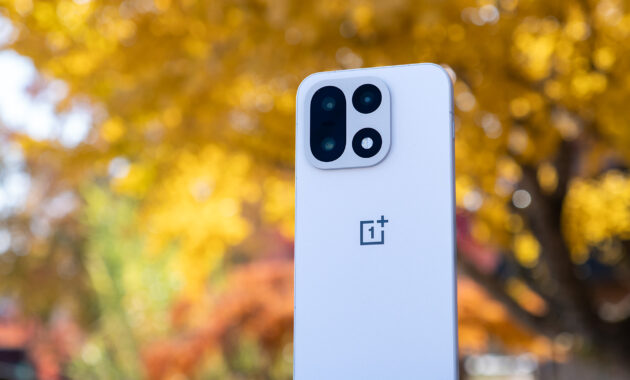
OnePlus 15 Review: In the hyper-competitive smartphone market of late 2025, OnePlus has always positioned itself as the disruptor—the brand that delivers flagship-level specs at mid-range prices without the bloat. The OnePlus 15, announced in October 2025 and hitting shelves just in time for the holiday rush, aims to continue that legacy.
Priced starting at $899 for the base 12GB RAM/256GB storage model (with higher configs up to $1,099 for 16GB/1TB), it promises a Snapdragon 8 Elite Gen 5 chipset, a massive 7,300mAh battery, and a redesigned chassis that’s tougher than ever. But as we’ve seen with recent flagships, promises on paper don’t always translate to real-world delight. Drawing from hands-on testing across multiple reviews, this 1,500-word deep dive explores whether the OnePlus 15 is the value king it claims to be or if compromises in camera hardware and software polish hold it back.
At first glance, the OnePlus 15 feels like a refined evolution rather than a revolution. Gone are the curved edges and faux-leather textures of the OnePlus 13; in their place is a flat, industrial aesthetic inspired by the Oppo Find X9 series. Measuring 161.4 x 76.7 x 8.1mm and weighing just 211g (for the Sand Storm variant), it’s remarkably slim despite packing that enormous battery.
The aluminum alloy frame features a micro-arc oxidation finish for a premium, ceramic-like tactility, while the back options include Gorilla Glass 7i, Crystal Shield Glass, or a lightweight fiberglass panel in select colors. Available in Infinite Black (a deep matte glass that fingerprints love to hate), Sand Storm (beige-ish with a subtle sheen), and the limited-edition Ultra Violet, the design exudes maturity but lacks the “wow” factor of past models.
One standout change is the ditching of the iconic Alert Slider in favor of the “Plus Key”—a customizable side button akin to Apple’s Action Button. It can toggle silent mode, launch the camera, or trigger AI features, offering flexibility but losing that tactile uniqueness. Durability gets a massive upgrade with IP68, IP69, and IP69K ratings, meaning it can withstand high-pressure water jets and submersion up to 2m for 30 minutes—ideal for accidental pool dips or rainy hikes.
The camera bump is a large, pill-shaped module that’s flush with the frame, minimizing wobbles on desks but attracting lint like a magnet. Overall, it’s comfortable in hand with curved edges sweeping into the flat display, though the slippery glass back begs for the included magnetic case (Europe gets a Hole-Pattern version for accessory snapping). It’s a phone that prioritizes function over flair, scoring high on ergonomics but low on memorability.
OnePlus 15 The display is where the OnePlus 15 starts to shine—or rather, illuminate. The 6.78-inch LTPO AMOLED panel boasts a 1,272 x 2,772 resolution (1.5K, 450ppi), a step down from the OnePlus 13’s sharper 2K screen but still razor-sharp for everyday use. With a variable refresh rate up to 165Hz (full LTPO smarts for 1-120Hz adaptive), Dolby Vision, HDR10+, and a peak brightness of 1,800 nits, it’s a visibility champ in direct sunlight. Colors pop with 1 billion shades, and the 1.15mm bezels create an immersive edge-to-edge feel, enhanced by a dedicated touch-response chip sampling at 3,200Hz for buttery gaming inputs.
OnePlus 15 In practice, it’s one of the best screens on any Android phone this year—vibrant for Netflix binges, responsive for Genshin Impact marathons, and accurate out of the box with minimal calibration needed. The PWM dimming keeps eye strain low, and Ultra HDR support elevates photo viewing. That said, the resolution dip might irk pixel-peepers upgrading from higher-res rivals, but for most, it’s a non-issue.
OnePlus 15 Performance is the OnePlus 15’s undisputed strong suit, courtesy of Qualcomm’s Snapdragon 8 Elite Gen 5 (3nm process) paired with up to 16GB LPDDR5X Ultra Plus RAM and UFS 4.1 storage. Geekbench 6 scores hover around 3,696 single-core and 11,187 multi-core, edging out the Galaxy S25 Ultra in multi-threaded tasks while trailing Apple’s A19 Pro by a hair in single-core efficiency. PCMark Work 3.0 benchmarks show it surpassing the OnePlus 13 but not quite matching Samsung’s thermal wizardry.
Real-world use is snappy: apps launch instantly, multitasking with 20+ tabs feels effortless, and the Adreno 840 GPU handles ray-traced games like Cyberpunk 2077 at max settings without a stutter—provided you don’t push it for hours. The 360 Cryo-Velocity cooling system (vapor chamber plus cooling gel) keeps things cool during casual sessions, but stress tests reveal the Achilles’ heel: prolonged gaming or navigation causes overheating after 15-20 minutes, dropping frames in 3DMark Wild Life (60% stability) and making the chassis uncomfortably warm. It’s not a dealbreaker for average users, but power users might notice throttling compared to the more consistent Pixel 10 Pro.
OnePlus 15 The camera system is the most polarizing aspect of the OnePlus 15—a bold hardware refresh that’s equal parts ambitious and frustrating. Ditching the Hasselblad partnership, OnePlus introduces a triple 50MP setup: a 1/1.56-inch main sensor (f/1.8, OIS), a 50MP telephoto (3.5x optical zoom, f/2.8, up to 7x lossless), and a 50MP ultrawide (116° FOV, f/2.0). A 32MP front camera rounds it out, with video up to 8K@30fps or 4K@120fps Dolby Vision.
OnePlus 15 Powered by the new DetailMax Engine, it excels in controlled scenarios: daytime shots deliver sharp details, natural colors, and excellent dynamic range at 1x and 2x, with the telephoto nailing portraits via precise depth mapping. The ultrawide captures expansive landscapes without the barrel distortion plaguing cheaper phones, and macro mode shines for close-ups. Burst shooting hits 10fps, and underwater mode (leveraging IP69K) adds fun for aquatic snaps. Video stabilization is top-tier, with gyro-EIS smoothing handheld 4K footage like a gimbal.
However, the smaller sensors (downgraded from the OnePlus 13’s larger ones) and narrower apertures bite back in low light: shadows turn noisy, shutter lag misses fleeting moments, and night mode over-processes, leading to waxy skin tones. Zoom beyond 3.5x introduces pixel smearing and oversharpening, lagging behind the Pixel 10’s AI wizardry or iPhone 17’s consistency. Harsh lighting flattens contrasts, and AI edits (like Portrait Glow) can feel gimmicky. It’s “good enough” for social media but won’t satisfy photography enthusiasts—think competent point-and-shoot, not pro tool.
If there’s one area where the OnePlus 15 obliterates the competition, it’s battery life. The 7,300mAh silicon-carbon cell (enabled by Silicon NanoStack tech for density without bulk) is a monster, claiming over 80% health retention after four years. In tests, it clocks 38+ hours of 4K video playback and crushes mixed-use scenarios: a full day of gaming, streaming, and GPS barely dips below 50%, often stretching to day two or three with moderate habits. Web browsing and Zoom calls see it outlast rivals by hours, earning “chart-topping” accolades.
Charging is equally blistering: 120W SuperVOOC hits 50% in 15 minutes and full in 40 (charger included in most regions), while 50W AirVOOC wireless (with magnetic puck) does 0-100% in under an hour. Reverse wireless (10W) and wired (5W) keep accessories juiced, and Bypass Charging mode protects the battery during plugged-in gaming. No other global flagship matches this endurance without feeling like a brick.
Software on the OnePlus 15 runs OxygenOS 16 atop Android 16, blending clean aesthetics with OPPO-inspired flair. It’s fluid with customizable themes, icon packs, and Quick Settings layouts, but the interface feels busier than Pixel’s stock Android—think heavier animations and a cluttered Shelf widget that interrupts workflows. AI integrations shine via Mind Space: a hub that scans screenshots, notes, and voice memos to generate summaries, reminders, or even journal entries—accessible via Plus Key or three-finger swipe. Tools like AI Translate and Writer add utility without being intrusive.
Update support is a sore spot: four years of OS upgrades and six of security patches trail Samsung and Google’s seven-year promise, potentially leaving it outdated by 2029. Still, it’s bloat-free and customizable enough for daily drivers.
Pros and Cons
| Aspect | Pros | Cons |
|---|---|---|
| Design | Slim, durable (IP69K), customizable Plus Key | Slippery back, less distinctive than predecessors |
| Display | Vibrant 165Hz AMOLED, bright outdoors | Resolution downgrade from OnePlus 13 |
| Performance | Blazing Snapdragon 8 Elite Gen 5, smooth multitasking | Thermal throttling in extended sessions |
| Camera | Sharp daylight shots, strong video stabilization | Weak low-light, over-processing at zoom |
| Battery | Epic 38+ hour endurance, ultra-fast charging | None notable |
| Software | AI features like Mind Space, fluid UI | Cluttered elements, short update window |
Comparison Table: OnePlus 15 vs. Rivals
| Feature | OnePlus 15 | Samsung Galaxy S25 Ultra | Google Pixel 10 Pro | Apple iPhone 17 Pro |
|---|---|---|---|---|
| Price (Base) | $899 | $1,299 | $999 | $1,099 |
| Chipset | Snapdragon 8 Elite Gen 5 | Snapdragon 8 Elite Gen 5 | Tensor G5 | A19 Pro |
| Display | 6.78″ 1.5K AMOLED, 165Hz | 6.8″ QHD+ AMOLED, 120Hz | 6.8″ QHD+ OLED, 120Hz | 6.3″ Super Retina XDR, 120Hz |
| Battery | 7,300mAh, 120W wired | 5,000mAh, 45W wired | 5,050mAh, 30W wired | ~3,500mAh, 30W wired |
| Camera (Main) | 50MP (f/1.8) | 200MP (f/1.7) | 50MP (f/1.7) | 48MP (f/1.78) |
| OS Updates | 4 years | 7 years | 7 years | 7 years |
| Weight | 211g | 233g | 213g | 187g |
In conclusion, the OnePlus 15 is a triumph of engineering pragmatism—a phone that eradicates battery anxiety, delivers desktop-class performance in a pocketable form, and undercuts pricier rivals on specs alone. Yet, it’s haunted by compromises: a camera that punches below its weight, thermals that falter under fire, and software that’s one polish pass from greatness. If you’re a OnePlus loyalist or prioritize endurance over Instagram perfection, it’s a steal at $899. For shutterbugs or longevity seekers, glance at the Pixel 10 Pro or Galaxy S25 series. Ultimately, the 15 proves OnePlus can still swing for the fences, even if it doesn’t always connect.
- Camera8
- Desigh9
- battery9
- Performance10
- Display10
